

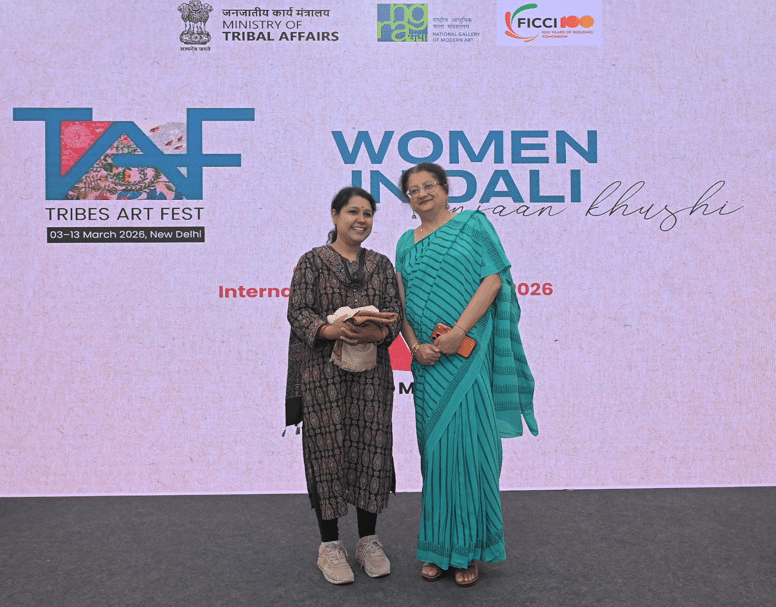
Travancore House, New Delhi
On 8 March 2026, Travancore House in New Delhi hosted Women in Dali – Anjaan Khushi to mark International Women’s Day. The event was part of the Tribes Art Festival and brought together artists, scholars, and cultural voices. Hosted by Dali Art Studio, the initiative focused on recognising women artists and their personal journeys.
The programme was organised in collaboration with FICCI, the Ministry of Tribal Affairs, and the National Gallery of Modern Art. It honoured six artists whose work reflects lived experience and creative expression.
Misha Yarramilli’s Journey Through Art
Among them was Misha Yarramilli. At Women in Dali – Anjaan Khushi, Misha Yarramilli’s work stood out for its deeply personal and reflective nature.
Around twelve years ago, a major shift took place in her life. The birth of her first son, who is a special child, changed her perspective in profound ways. The period that followed was not easy. It brought new responsibilities, emotional challenges, and a need to adjust to a different rhythm of life.
Misha often describes this phase as a cocoon. It was a time when she felt withdrawn and focused inward. During this period, she was learning, adapting, and processing her experiences quietly.
It was within this space that art began to take on a new role.
For Misha Yarramilli, art became more than practice. It became a way to reflect and heal. As a sculptor, she began working with materials in a slower and more meditative way. The act of shaping forms helped her organise her thoughts and emotions.
Her process is calm and deliberate. Each work develops over time. Through this, she creates a sense of stillness within the work itself.
An important element in her sculptures is the use of groundnut textures. This is a distinctive feature of her practice. What appears to be a simple, everyday material is transformed into something layered and meaningful.
By using such textures, she adds depth to her surfaces. The material brings both visual and tactile richness. It also reflects her approach to art—finding value and meaning in unexpected places.
Her work does not rely on complexity. Instead, it focuses on experience. The forms she creates carry a quiet emotional weight. They do not explain everything directly, but they allow space for reflection.
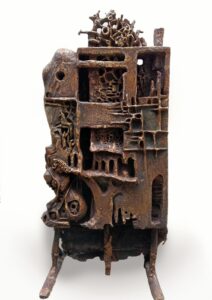
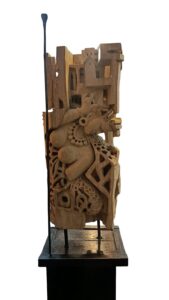
At Women in Dali – Anjaan Khushi, her felicitation recognised this journey. It acknowledged how her work has grown from personal experience and evolved into a meaningful artistic practice.
The event itself created a setting where such stories could be shared. It brought together artists and audiences in a space that encouraged attention and understanding. Rather than a fast-paced exhibition, it allowed moments of pause.
In this environment, Misha Yarramilli’s work connected strongly. It reflected a process that many could relate to—finding ways to move through difficult phases and create something meaningful from them.
Her practice shows that art does not always begin with an idea. Sometimes, it begins with experience. Over time, that experience takes form and becomes expression.
Through her sculptures, Misha Yarramilli creates spaces that are both personal and open. They hold memory, reflection, and a sense of quiet strength.
To explore more about the initiative and upcoming exhibitions, you can also visit Dali’s Instagram page.
Read more about Women in Dali here: Women in Dali