

Travancore House, New Delhi
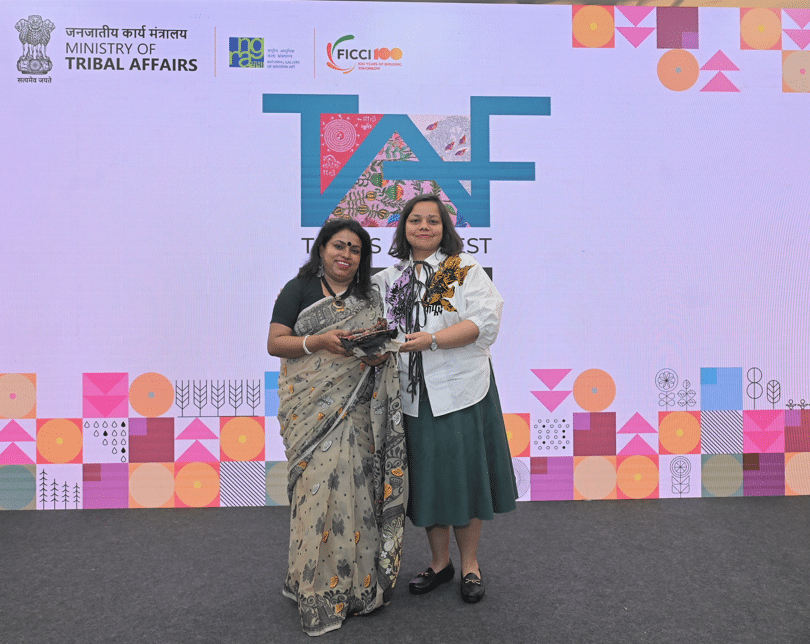
On 8 March 2026, Travancore House in New Delhi became a space for reflection and exchange as Women in Dali – Anjaan Khushi marked International Women’s Day. The event was part of the Tribes Art Festival and brought together artists, thinkers, and cultural voices in a setting that encouraged both conversation and quiet engagement. Hosted by Dali Art Studio, the initiative focused on creating a platform where artistic journeys and lived experiences could be recognised and shared.
The programme was organised in collaboration with FICCI, the Ministry of Tribal Affairs, and the National Gallery of Modern Art. Together, these institutions contributed to an evening that highlighted the work of six women artists. Each artist brought a distinct perspective, shaped by personal experience, practice, and process.
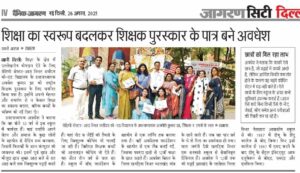
Among them was Tapasi Sen, whose journey as an artist is closely connected to her role as an educator. She teaches painting at a Delhi government school, where she works with students from financially challenged backgrounds. In this environment, art becomes more than a subject. It becomes a way for students to explore new forms of thinking and expression, often beyond the limitations of their circumstances.
Teaching, for Tapasi, is not separate from her artistic practice. The two continue to inform each other. Her engagement with students brings her closer to questions of access, opportunity, and the role of creativity in everyday life. At the same time, her own work reflects a sensitivity to process and material that resonates with these experiences.
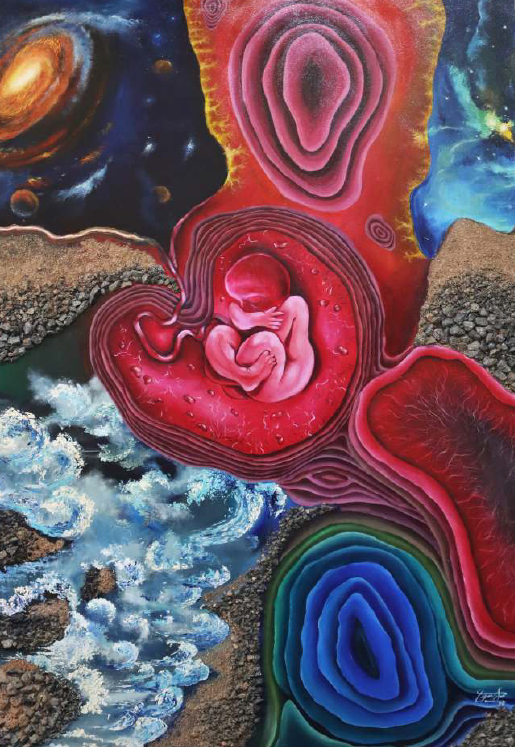
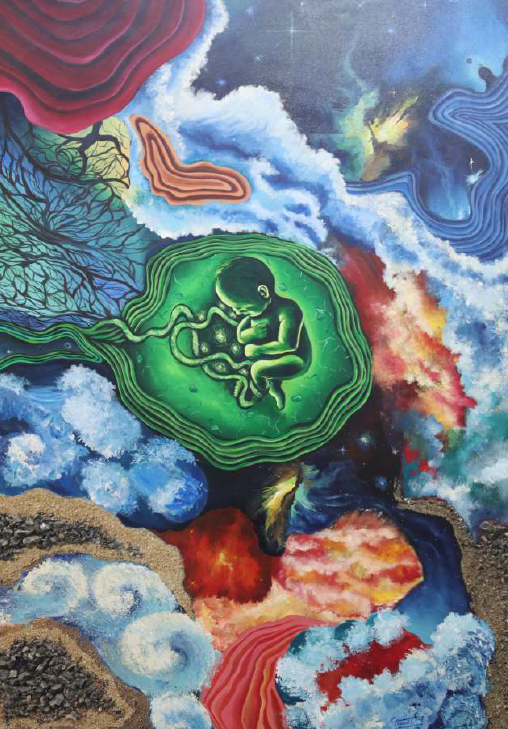
In her studio practice, Tapasi Sen is known for her layered mixed-media compositions. She works with materials such as soil, stones, pigments, and textured surfaces. These elements are not used merely for visual effect. Instead, they become integral to the meaning of the work. The presence of natural materials gives her paintings a tactile and grounded quality, connecting them closely to the physical world.
Her process is gradual. Layers build over time, each one adding depth and complexity. The surface of the work carries traces of what lies beneath, allowing the viewer to sense the passage of time within the piece. This approach reflects a way of thinking about art that is patient and attentive, where meaning emerges slowly rather than all at once.
A recurring form in her work is that of the embryo. For Tapasi, this image holds a quiet significance. It represents the beginning of life—a moment that is small, almost invisible, yet full of potential. The embryo becomes a symbol of growth, transformation, and possibility. It reflects the idea that life unfolds in stages, shaped by layers of experience and memory.
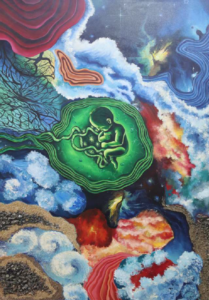
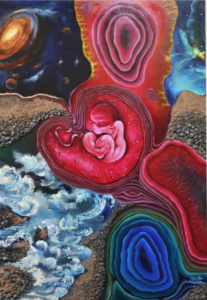
This idea connects closely with her use of materials. Just as the embryo suggests a beginning, her layered surfaces suggest continuity. Together, they create a visual language that speaks of life as a process rather than a fixed state. Her work does not seek to present a single message. Instead, it offers a space where meanings can develop gradually.
At Women in Dali – Anjaan Khushi, her felicitation recognised both aspects of her practice—her work as an artist and her contribution as an educator. Within the context of the event, this dual role held particular significance. It highlighted the ways in which art can move beyond individual expression and become part of a larger social and cultural framework.
The atmosphere of the evening supported this idea. It was not defined by spectacle, but by attention. Viewers engaged with artworks, conversations unfolded, and moments of observation became as important as moments of interaction. This setting allowed the work to be experienced at its own pace.
In this environment, Tapasi Sen’s practice found a natural connection. Her work, rooted in material and process, invites viewers to slow down and look closely. It reflects an understanding that creativity often begins with simple elements—soil, pigment, texture—and grows through time and effort.
Her work ultimately reminds us that art and life share a similar rhythm. Both are shaped gradually, through layers of experience, memory, and change. What begins as something small can develop into something complex and meaningful.
To explore more about the initiative and upcoming exhibitions, you can also visit Dali’s Instagram page.
Read more about Women in Dali here: Women in Dali